
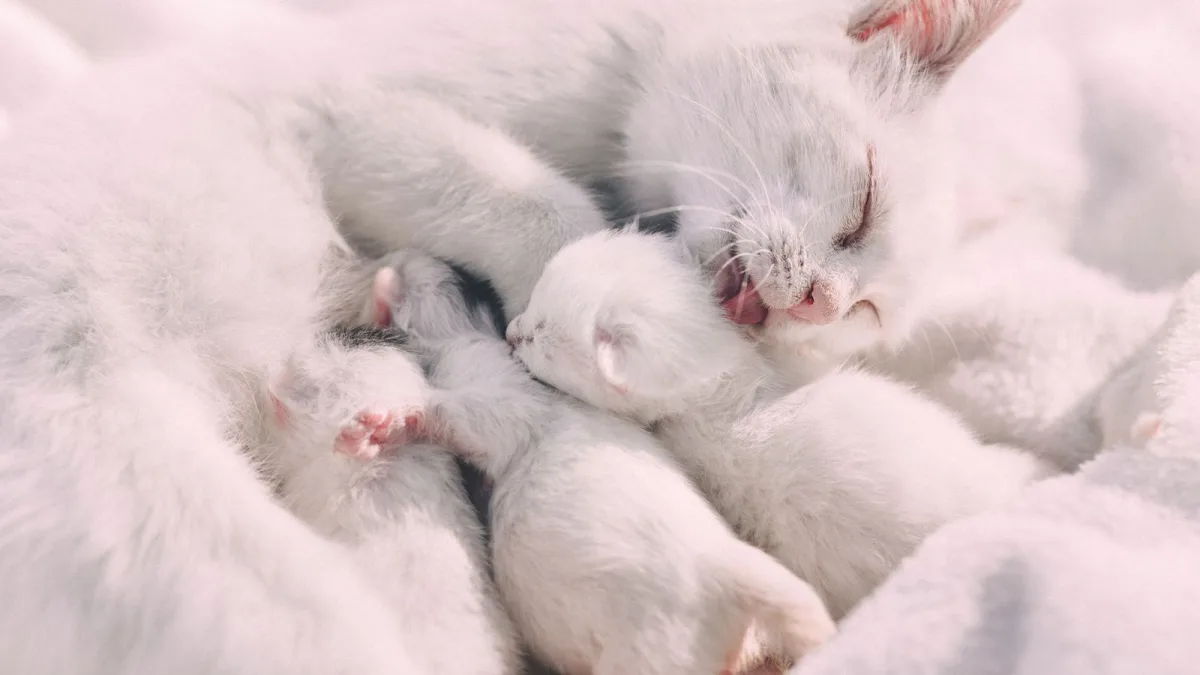
Cat Pregnancy: Duration, Stages and Feeding the Queen Before and After Birth
احسب موعد ولادة قطتك من تاريخ التلقيح
A cat's pregnancy lasts around sixty-five days, and it differs from a dog's more than most people expect: the queen gains weight early, and she should move onto growth food as soon as the pregnancy is confirmed rather than halfway through. Here are the stages, the right feeding, and the signs you must not wait on.
Duration and stages
The average is about sixty-five days from the day of mating.
The normal range
Fifty-eight to seventy-two days. Birth before fifty-eight days counts as premature, and those kittens need more warmth and care.
Weeks two and three
The first visible sign is usually the nipples turning pink and becoming more prominent, which can show from around day fifteen. On its own it is suggestive, not conclusive.
From week three
A vet can see the fetuses on ultrasound from around day twenty-one, which is the most reliable early confirmation.
From week six
An X-ray can count the kittens once their skeletons have calcified. It is useful before birth to know whether she has finished or one is still inside.
Work out the expected due date
Our calculator gives you the dates from the mating day: the cat pregnancy calculator
Feeding: a cat is not a small dog
This is where canine advice gets repeated for cats and gets it wrong.
The queen gains weight early
Unlike a bitch, whose weight is largely stable for the first three weeks, a cat starts gaining from around week two and keeps gaining until birth. That gain is not excess: much of it is a reserve she will burn during lactation.
Move her onto growth food early
Kitten food, or a food labelled as suitable for gestation and lactation, carries the higher energy and protein she needs from the moment pregnancy is confirmed — not from the midpoint, as with dogs.
Portions rise gradually
By late pregnancy intake is typically up by twenty-five to fifty percent, depending on the number of kittens and her condition.
Smaller, more frequent meals
In the last two weeks the abdomen presses on the stomach, so three or four small meals work better than two large ones.
Do not add calcium on your own
Supplementing during pregnancy raises the risk of lactation tetany rather than preventing it. Any supplement is the vet's call, not a guess.
After birth: lactation is harder than pregnancy
Many people cut the food back after birth. The opposite is correct.
The peak is around weeks three and four
Her requirement can reach two to three times maintenance, and more with a large litter.
Leave food available
A nursing mother is one of the few cases where free access to food is the right approach.
Water matters more than ever
Milk production takes a lot of water. Keep clean water close to her and change it more than once a day.
Weaning
Start introducing food to the kittens at around week four; weaning completes at about week eight. Keep the mother on growth food until weaning is over, then move her back gradually.
Two things that surprise people
Two facts that change decisions.
She can get pregnant again while still nursing
Heat can return four to six weeks after birth, while she is still feeding kittens. If you do not want a second litter straight away, this is when to talk to your vet about spaying and to keep her away from toms.
One litter can have more than one father
A queen can mate with several males in the same heat, so kittens in one litter may have different fathers. It is not a health problem, but it explains why they can look so different.
The nesting box
Simple is better.
A low, roomy box
In a quiet, relatively dark place away from traffic and noise. Cats look for seclusion more than dogs do.
Set it up a week or two before the date
So she gets used to it — otherwise she will give birth in a wardrobe or under the bed.
Moderate warmth
Newborn kittens cannot regulate their own temperature, so the place must be warm without being hot.
Signs that need a vet immediately
Do not wait on these.
Strong straining for more than half an hour with no kitten delivered
More than two hours between kittens while others remain
Green or dark discharge before the first kitten arrives
Complete refusal to eat for more than a day in the final weeks
Tremors, seizures or heavy panting after birth — lactation tetany is an emergency
Fever, lethargy or foul-smelling discharge after birth
Our brands, made in Egypt
Petzy Bites is an Egyptian factory in the industrial zone in Banha. We produce our own brands for the Egyptian market with growth formulas built on international standards — the same formulas that suit a pregnant or nursing mother. Every batch carries a lot number.
Where to buy
From our store at 101bite.com, priced in Egyptian pounds with delivery inside Egypt, or from the retail points we serve in Cairo, Giza and the governorates.
Want your own brand manufactured
We manufacture for third parties with a three-ton minimum. Request a quote at our private-label page